Category

Uncategorized

The Hidden Air Crisis: Why Cleaning Your Air Ducts Isn’t Enough

By | Uncategorized | No Comments

When you think about home maintenance, your air ducts are likely a case of “out of sight, out of mind.” However, the air circulating through your living spaces plays a massive role in your family’s daily health and comfort. If you think a quick vacuuming of your vents is enough to solve your indoor air issues, the reality of modern home design might surprise you.

1. The Trap of the Modern Home
Many people assume that going indoors protects them from the pollution of the outside world. However, data from the U.S. Environmental Protection Agency (EPA) reveals a startling fact: indoor air quality is usually significantly worse than outdoor air.
Why is this happening? In modern homes, the building envelope is more tightly sealed for energy efficiency. While this is excellent for keeping your utility bills low, it comes with a major downside. Tightly sealed homes prevent natural ventilation, causing everyday pollutants to get trapped and continuously accumulate inside your living spaces. Because the same air is recirculated over and over again, your home becomes a closed ecosystem for contaminants.
2. What Is Actually Lurking Inside Your Ducts?
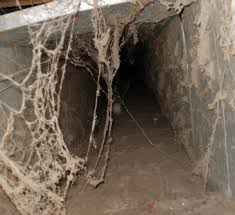
Your HVAC system acts as the lungs of your home, drawing air in and pushing it out. Over time, a massive cocktail of microscopic debris settles inside the dark corners of your ductwork.
If you were to peek inside an unmaintained air system, the contaminants in your ducts could include:
    • Biological hazards: Molds, algae, and bacteria thriving in dark, moisture-prone spaces.
    • Daily debris: Dust, pollen, human skin flakes, and pet dander.
    • Renovation remnants: Drywall dust, sawdust, and raw construction materials.

Every time your heating or cooling kicks on, these particles are blasted back into your rooms, settling on your furniture and entering your lungs.
3. Proper Cleaning Means the Whole System, Not Just Ducts
If you decide to invest in air purification, here is a critical insider tip: be sure to have all components of the air system cleaned, not just the ducts.
According to guidelines from the National Air Duct Cleaners Association (NADCA), treating only the ductwork is a temporary, ineffective fix. If a technician leaves the rest of your HVAC system dirty, the remaining components will immediately recontaminate your freshly cleaned ducts. A thorough, professional cleaning must encompass the entire air-handling circuit, including:
    • Heating and cooling coils
    • Fan motor and blower assembly
    • Condensate drain pans
    • Registers, grilles, and diffusers

4. The Bird’s Restoration and Cleaning Difference
You shouldn’t trust your home’s air quality to just anyone with a shop vac. At Bird’s Restoration and Cleaning, Inc., we take indoor air quality seriously. We are proud to be Air Systems Cleaning Specialist (ASCS) certified by NADCA, ensuring your system is cleaned according to the highest, most stringent industry standards.
We don’t believe in guesswork. Our initial inspection will determine the best cleaning methods specifically tailored to your home’s unique layout and contamination levels. From there, we use the latest methods and state-of-the-art equipment to clean your HVAC systems, utilizing high-powered, negative-pressure vacuum systems to safely extract debris without releasing it back into your home.

Exciting News: Complete HVAC Services Are Coming Soon!
As a final thought, we are thrilled to share a sneak peek into the future of Bird’s Restoration and Cleaning, Inc. Very soon, we will be doing much more than just cleaning your air systems!
We are actively expanding our capabilities to become your all-in-one comfort experts. In the near future, our team will be fully equipped to handle your total climate control needs, including HVAC repairs, equipment change-outs, and brand-new system installations. Whether you need to purify your current air, fix a broken unit, or completely upgrade to a modern, energy-efficient system, we will have you covered.
Breathe Easier Today
Don’t let your home’s air system work against your health. Contact Bird’s Restoration and Cleaning, Inc. today to schedule your comprehensive system inspection, and stay tuned for our upcoming full-service HVAC launch!

The Truth About Mold: What Every Homeowner Needs to Know

By | Uncategorized | No Comments

Mold is a topic surrounded by myths, quick-fix marketing, and dangerous DIY advice. To truly protect your home and your health, you need to understand the science of how mold behaves, how it impacts the human body, and why your trusty bottle of bleach might actually be making the problem worse.

Here is the breakdown of what is really happening behind your drywall.

1. The Three Indoor Mold Conditions
In the professional remediation industry, indoor spaces are categorized into three distinct environmental states, known as Conditions 1, 2, and 3.
  • Condition 1 (Normal Fungal Ecology): This is the ideal state for any indoor environment. It means the building has a normal, healthy level of airborne mold spores that mirrors the natural outdoor environment, with no active indoor growth. [1]
  • Condition 2 (Settled Spores): This environment contains an accumulation of mold spores that have settled onto surfaces. While there may not be visible, active growth colonies yet, the high concentration of dust and spores indicates a problem waiting to happen if moisture is introduced. [1, 2]
  • Condition 3 (Actual Growth / Dispersing Spores): This is an active infestation. In a Condition 3 environment, you can actively see and smell the mold. The colony is mature and actively dispersing millions of spores and fragments into the breathing zone. [1, 2, 3]

2. Mold is ALWAYS a Water Problem [1]
If you have mold, you have a moisture problem. Period. Mold spores exist everywhere in the air, but they remain completely harmless until they find water. Whether it is a catastrophic pipe burst, a slow roof leak, or simple indoor humidity exceeding 50-60%, water is the literal “on” switch for mold growth. You can clean mold a thousand times, but if you do not permanently fix the water source, it will return every single time. [1, 2, 3]

3. Source Removal vs. Spray Cleaners
When people discover mold, their first instinct is to run to the store for a chemical spray cleaner. This is a fundamental mistake. Spray cleaners merely alter the appearance of mold or temporarily halt surface growth.
True mold remediation requires source removal. Because mold physically digests the organic material it grows on, the contaminated material must either be physically cut out and discarded (like drywall or carpet) or physically abraded and sanded down to bare, clean wood. You cannot simply spray away a deeply rooted biological organism. [1, 2, 3, 4]

4. Let’s Talk About Bleach (The Ultimate Myth)
Standard household bleach is the most commonly recommended DIY mold remedy, yet it is often the worst choice you can make.
  • Non-Porous Surfaces Only: Bleach can effectively sanitize and kill mold on entirely non-porous surfaces like standard glass, porcelain, metal, or glazed tiles. [1]
  • Porous Surfaces (The “Root” Problem): Bleach cannot penetrate porous materials like wood, plaster, or drywall. Mold grows deep “roots” (called hyphae) into these materials. The chemical structure of bleach prevents it from sinking into these pores, leaving the roots completely alive. [1, 2, 3, 4]
  • Bleach Actually Feeds Mold: Household bleach is heavily diluted with water. When you spray it on wood or drywall, the chlorine quickly evaporates on the surface, leaving behind a massive amount of water. This water sinks deep into the material, effectively watering and feeding the mold roots. Once the chemical becomes inert, the mold returns faster and stronger than before. [1, 2]

5. Cleaning Mold Without Spreading Spores
When you disturb an active mold colony by scrubbing or tearing it down, it defends itself by releasing millions of microscopic spores into the air. If you do not isolate the area, you will cross-contaminate your entire home. Professional remediation relies on two strict principles: [1]
  • Containment: Sealing off the affected room entirely using heavy-duty plastic sheeting and specialized tape to prevent spores from drifting into unaffected areas of the property. [1, 2]
  • Negative Air: Utilizing industrial air filtration machines (HEPA air scrubbers) to pull air out of the containment zone and vent it outside. This creates negative pressure, ensuring that no contaminated air can escape into the rest of the house when workers enter or exit. [1, 2, 3, 4, 5]

6. Mycotoxins and Health Risks: Who is Most Vulnerable?
One of the most dangerous misconceptions is that dead mold cannot hurt you. Both viable (living) and non-viable (dead) spores contain mycotoxins. Mycotoxins are toxic chemical compounds produced by certain molds that are poisonous to humans when inhaled, ingested, or touched. Even if you completely dry out a colony and kill the mold, the remaining dust and fragments still carry these dangerous toxins. [1]
While mycotoxins can cause chronic fatigue, neurological issues, and respiratory distress in anyone, the demographics most prone to severe health complications include:
  • Children below 6 years of age (whose immune systems and lungs are still developing).
  • Adults above 60 years of age (who may have weakened immune systems or pre-existing respiratory conditions).

Don’t Risk Your Health—Call the Licensed Experts [1]
When it comes to mold, guessing is never worth the risk to your family’s health or your property’s value.
At Bird’s Restoration and Cleaning, Inc., we are fully licensed with the State of Texas for mold remediation (MRC1753). If you have recently experienced a water loss that was not professionally remediated, or if you are currently seeing or smelling mold in your home, don’t wait for the problem to grow. [1]
Give us a call today. We understand the science of mold, and we can help you safely restore your home to a normal, healthy environment. [1, 2]