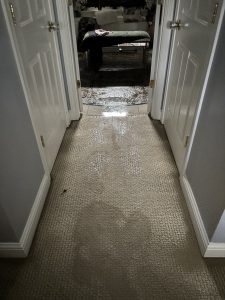
The Hidden Danger of Water Damage: Why “Dry to the Touch” Isn’t Enough
Many homeowners—myself included, before I joined the team at Bird’s—underestimate the seriousness of water damage. A simple air conditioner leak might seem manageable with a few towels and a household fan, but the damage you can’t see is often the most destructive.
The Science of Drying: Free vs. Bound Water
In the restoration industry, we talk about two types of moisture that affect your home’s structural integrity:
- Free Water: This is liquid water that lingers on surfaces or inside material cavities. It is “free” to move and can usually be removed quickly through extraction and standard evaporation.
- Bound Water: This is moisture that has been absorbed at a cellular level into the structural material. Bound water is much harder to remove and requires specialized drying methods and equipment to prevent long-term decay.
Why Invisible Water is a Ticking Clock
Even when your floors feel dry, “bound water” can remain trapped in your home’s “sill plates” (the bottom horizontal beam of a wall) or wicked up into the drywall (capillary action). If this internal moisture isn’t professionally dried, it leads to:
- Structural Wood Rot: Compromising the bones of your home.
- Mold Growth: Which can begin in hidden areas within 48 hours under the right conditions.
- Material Failure: Such as delaminated carpets and brittle, crumbling drywall.
Understanding Water Categories: Clean vs. Dirty
The source of the water determines the safety protocols and cleaning methods required. Restoration professionals categorize water into three main levels based on contamination:
- Category 1: Clean Water
- Source: Originates from sanitary sources like broken supply lines or faucet leaks.
- Risk: Initially poses minimal health risk. However, if left untreated for 24–48 hours, it can degrade into “Grey Water” as it mixes with building contaminants.
- Category 2: Grey Water (Dirty Water)
- Source: Comes from appliance drain lines like dishwashers, washing machines, or toilet overflows (without solid waste).
- Risk: Contains contaminants that may cause illness or discomfort if ingested or contacted.
- Category 3: Black Water (Grossly Contaminated)
- Source: Originates from sewage backups, floodwaters from rivers, or standing water supporting microbial growth.
- Risk: Highly hazardous and contains pathogens and toxic substances that pose severe health threats.
Don’t Leave It to Chance
Ensuring your home’s moisture levels stay below a safe threshold requires more than just equipment—it requires the education to know what can be saved, what must be removed, and what requires advanced treatment.
If you’ve experienced a leak, no matter how small, don’t wait for the damage to become visible. Contact a certified professional at Bird’s Restoration & Cleaning who has the tools and expertise to ensure your home is truly dry—at every level. We have 15 years of experience and Mr. Bird holds a Masters in Water Damage Restoration with the IICRC. Call us first, we are here to help you!